

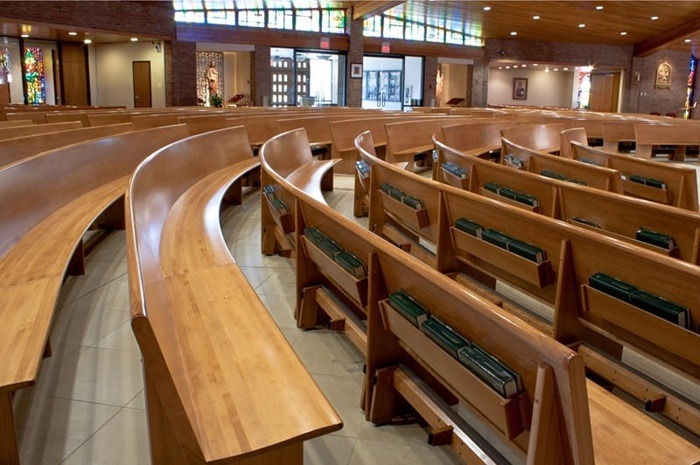
When designing or renovating a worship space, seating is one of the most influential decisions a congregation can make. Beyond simply accommodating attendees, seating affects sightlines, acoustics, movement, and the overall worship experience. One of the most common questions churches face is whether to choose straight pews or curved pews. Each option offers distinct advantages, and the right choice often depends on the sanctuary’s layout, traditions, and functional needs.
Understanding Straight Church Pews
Straight pews are the most traditional seating style found in churches across the world. Their simple, linear design aligns well with rectangular or narrow sanctuaries and supports orderly seating arrangements.
One of the primary benefits of straight pews is efficiency. They maximize seating capacity and are typically easier to install in uniform rows. Maintenance and future modifications—such as reconfiguring aisles or adding accessibility features—are also more straightforward.
From a visual standpoint, straight pews reinforce symmetry and formality, which many congregations associate with reverence and tradition. Churches that emphasize classic architecture or liturgical consistency often gravitate toward this style. For congregations seeking durability and timeless design, straight church pews remain a practical and familiar choice.
Exploring Curved Church Pews
Curved pews, on the other hand, are often chosen for their ability to enhance engagement and improve sightlines. Their gentle arc naturally directs attention toward the pulpit, altar, or stage, making them well-suited for fan-shaped or semi-circular sanctuaries.
One notable advantage of curved seating is the sense of connection it creates. Congregants may feel more visually engaged with both the worship leaders and one another, fostering a more communal atmosphere. Curved pews can also improve acoustics by helping sound travel more evenly throughout the space.
However, curved pews typically require custom planning and precise installation. They may slightly reduce seating capacity compared to straight layouts and can be more challenging to reconfigure. For churches prioritizing architectural impact and congregational interaction, the trade-offs are often worth considering.
Factors to Consider Before Choosing
Before deciding between straight and curved pews, churches should evaluate several practical factors:
- Sanctuary Shape: Rectangular spaces usually favor straight pews, while fan-shaped or circular sanctuaries benefit from curved designs.
- Worship Style: Traditional services may align better with straight pews, while contemporary or participatory services may benefit from curved seating.
- Accessibility Needs: Aisle spacing, wheelchair access, and ease of movement should be considered regardless of pew style.
- Long-Term Flexibility: Think about future renovations, attendance growth, or changes in service format.
Finding the Right Balance
There is no universal solution when it comes to sanctuary seating. Some churches even combine both styles, using curved pews in focal areas and straight pews elsewhere. The key is understanding how seating supports worship, community, and functionality over time.
Thoughtful planning—guided by the sanctuary’s architecture and the congregation’s needs—ensures that pew selection enhances the worship experience rather than limiting it. Whether straight or curved, well-designed seating plays a vital role in shaping how congregations gather, reflect, and connect.